The chipping and the craft

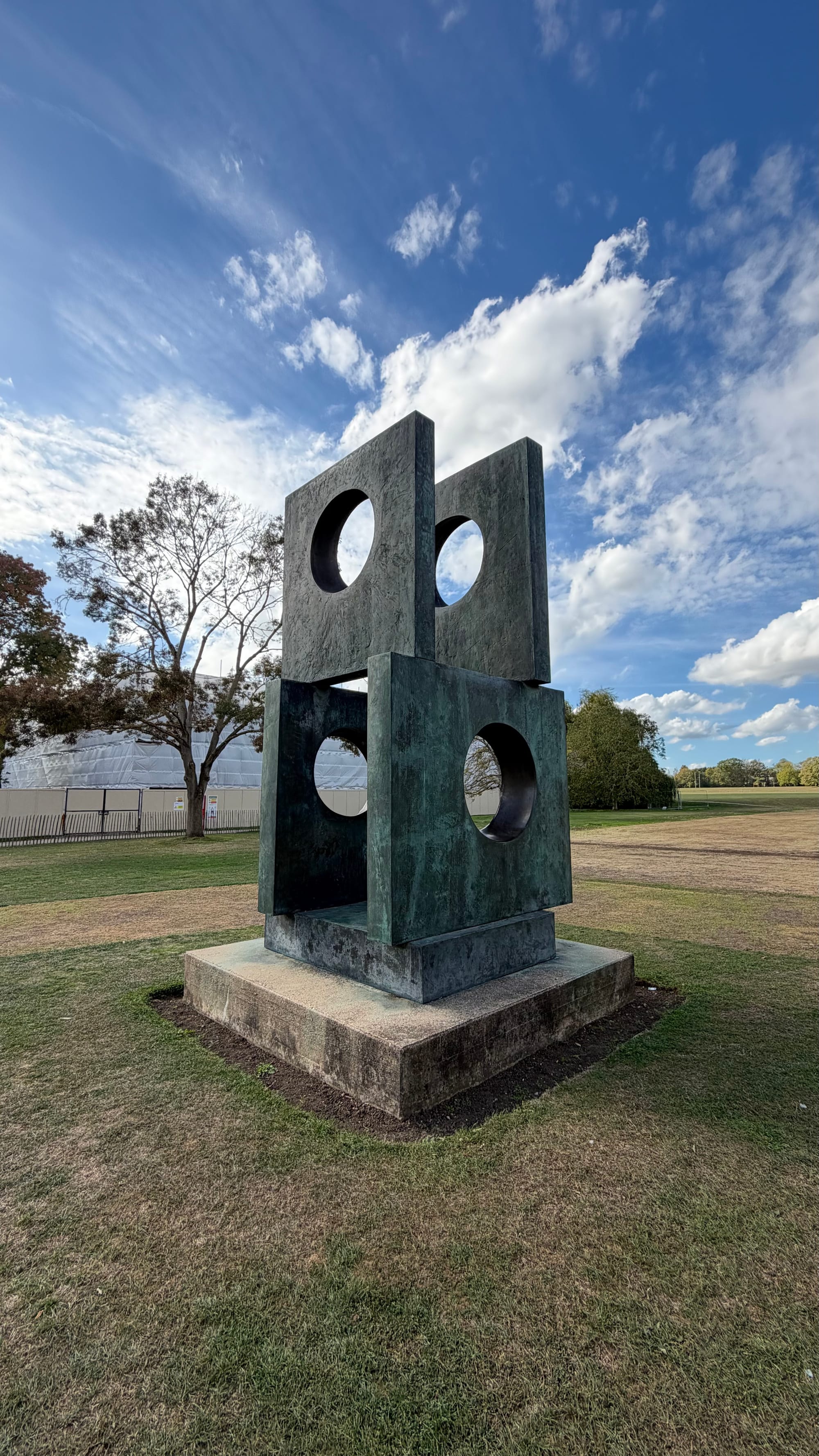
I've been at Agile Cambridge today, at Churchill College in Cambridge. There's a Barbara Hepworth sculpture on the lawn. Four-Square (Walk Through), a piece from later in Hepworth's career and life, 1966. Big flat squares of bronze stacked into two cubes, each face with a circle cut out. You're meant to walk through it.
The sculpture started small. Hepworth worked it up from smaller versions to a full-size plaster model on an aluminium armature, and the pieces were cast separately at a foundry and welded together. Earlier in her career she worked the other way: no model, straight into the stone, every cut a decision she couldn't take back.
Two ways of working.
Model first in clay or plaster, where ideas are cheap and mistakes can be undone. Or carve directly, responding to the material as you go.
Both are craft. The right one depends on the circumstances.
Michelangelo apparently said the statue is already in the block, and the sculptor just removes what isn't the statue. It makes the chipping sound like the work. It isn't. Anyone can hit a block of stone. Keep going and it'll get smaller.
Product work has its own version of this. We talk a lot about iteration, small releases, showing up and moving things forward. Most good things get made through lots of unglamorous small steps, consistency an underrated skill. But iteration only tells you that you're moving. It doesn't tell you whether you're moving towards anything.
Chipping away is a habit. The craft is a point of view.
A team that's chipping away is busy making. A team with craft is also busy understanding the service and the system around it. They test ideas against those needs before committing to them. They take care over saying no, because most of what's asked for shouldn't be built, or shouldn't be built yet. They're trying to make the right thing and make the thing right, for the circumstances they're in. From the outside, for a while, the two look the same.
A lot of what goes wrong in delivery is treating stone like clay – or clay like stone. Building for real when an idea should have been tested cheaply first. Or endlessly reworking the model and never picking up the chisel, which is avoidance, not craft. You learn where to strike by striking.
Chipping is easy to see and easy to count. Things shipped, deadlines met, boxes ticked.
Craft mostly shows up as things that didn't happen: the feature not built, the wrong direction not taken.
So what does your team count? And what does that tell you about which one you're rewarding?