Travel note: Seville — 19 to 22 March 2026

With Kristin. A long weekend, a lot packed in.
Why Seville
My interest in Spain goes back to an A-level in early modern history in the early 1990s, where I first encountered Isabella and Ferdinand, who reigned in the latter part of the 15th century — the Catholic Monarchs who completed the Reconquista, driving the Moors from the Iberian peninsula. It sparked a fascination with Spain that has never really left me, and particularly with cities like Seville where you can see the layers of both cultures pressed up against each other in the stonework.
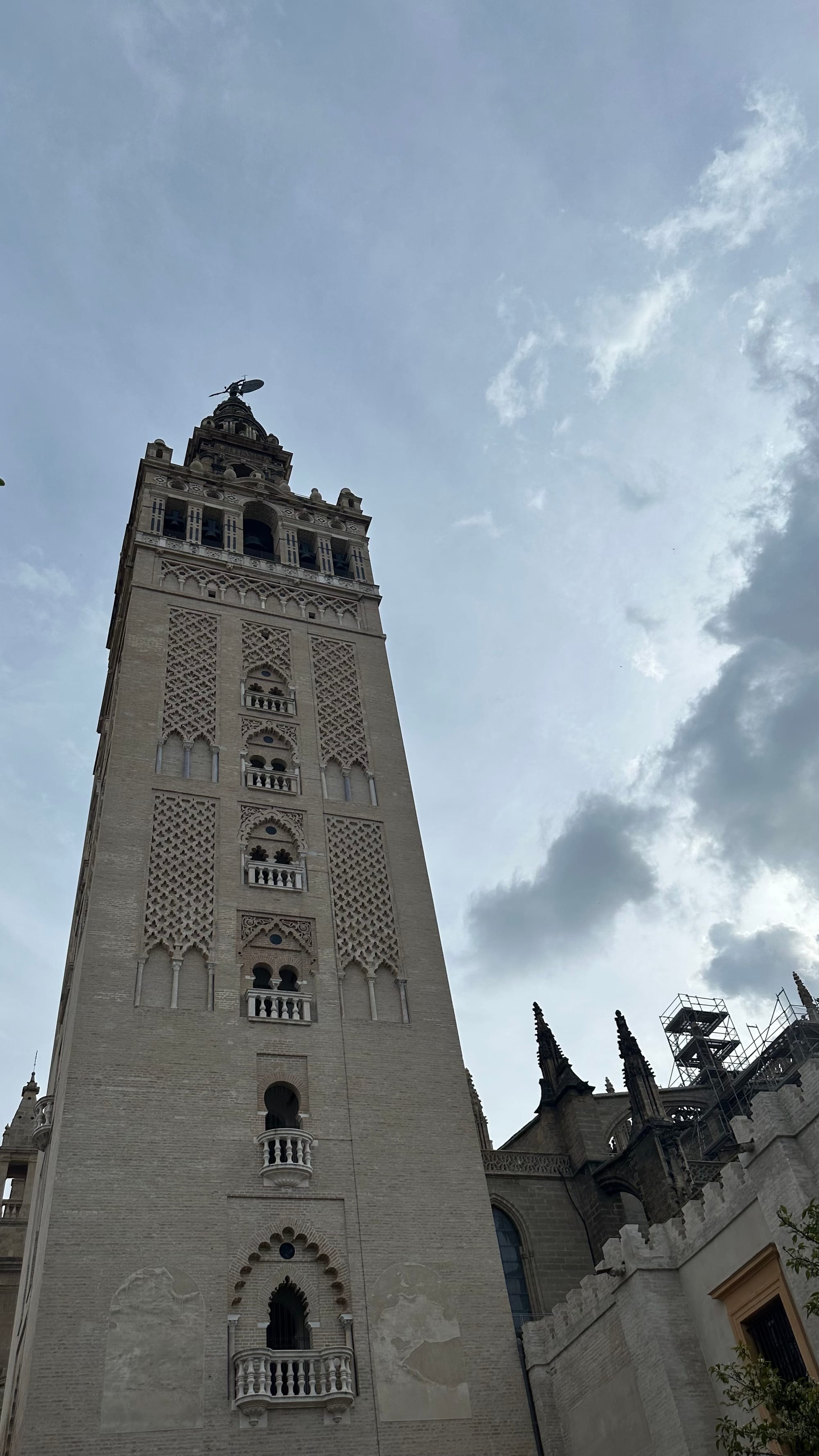
The cathedral is the most vivid example of that, standing on the site of a 12th-century Almohad mosque, which Ferdinand III (another Ferdinand, so many Fernandos) converted to Christian use when he took the city in 1248. Rather than erase what was there, the builders kept the mosque's ablution courtyard — now the Patio de los Naranjos, still fragrant with orange trees at this time of year, like the whole city — and its minaret, which became La Giralda, the bell tower that still dominates the Seville skyline. When the decision was taken in 1401 to build an entirely new Gothic cathedral on the same footprint, they kept those Islamic elements intact. It's a building that carries the layers of both cultures visibly and deliberately. The Reconquista written in stone.
Getting there
Manchester Airport the night before — an Ibis Budget, fine for what it is. RyanAir (don't judge) at 9:15am, landing in Seville at 12:10pm local time. The hotel — the Adriano Hotel Boutique — was around €550 for three nights: friendly staff, great location just round the corner from the cathedral and close to the river. A good base.
Taxi from the airport into the city centre: around €28, cobbled streets for the last stretch to the hotel. The driver was fine. (The Sunday morning driver back to the airport had considerably more gusto — but we made the flight.)
Tip: book your cathedral and Alcázar tickets at least two weeks in advance. Individual tickets were sold out by the time we looked — a guided tour was the only way into the cathedral. As it turned out, an excellent decision.
What we did
We don't tend to do group tours, but the cathedral forced our hand. Our guide Susanna was excellent — equal parts information and wry humour. On the two-year notice required to get married at the cathedral: "A lot can happen in two years. You find many people end up married to someone they weren't planning to marry when they booked." The scale inside is almost incomprehensible. Plan for well over two hours. Next time: up La Giralda tower.
On Friday we also visited the Setas: the vast mushroom-shaped wooden structure in the old town that houses the ruins below and a market and walkway above. Peculiar, striking, and somehow entirely Seville.
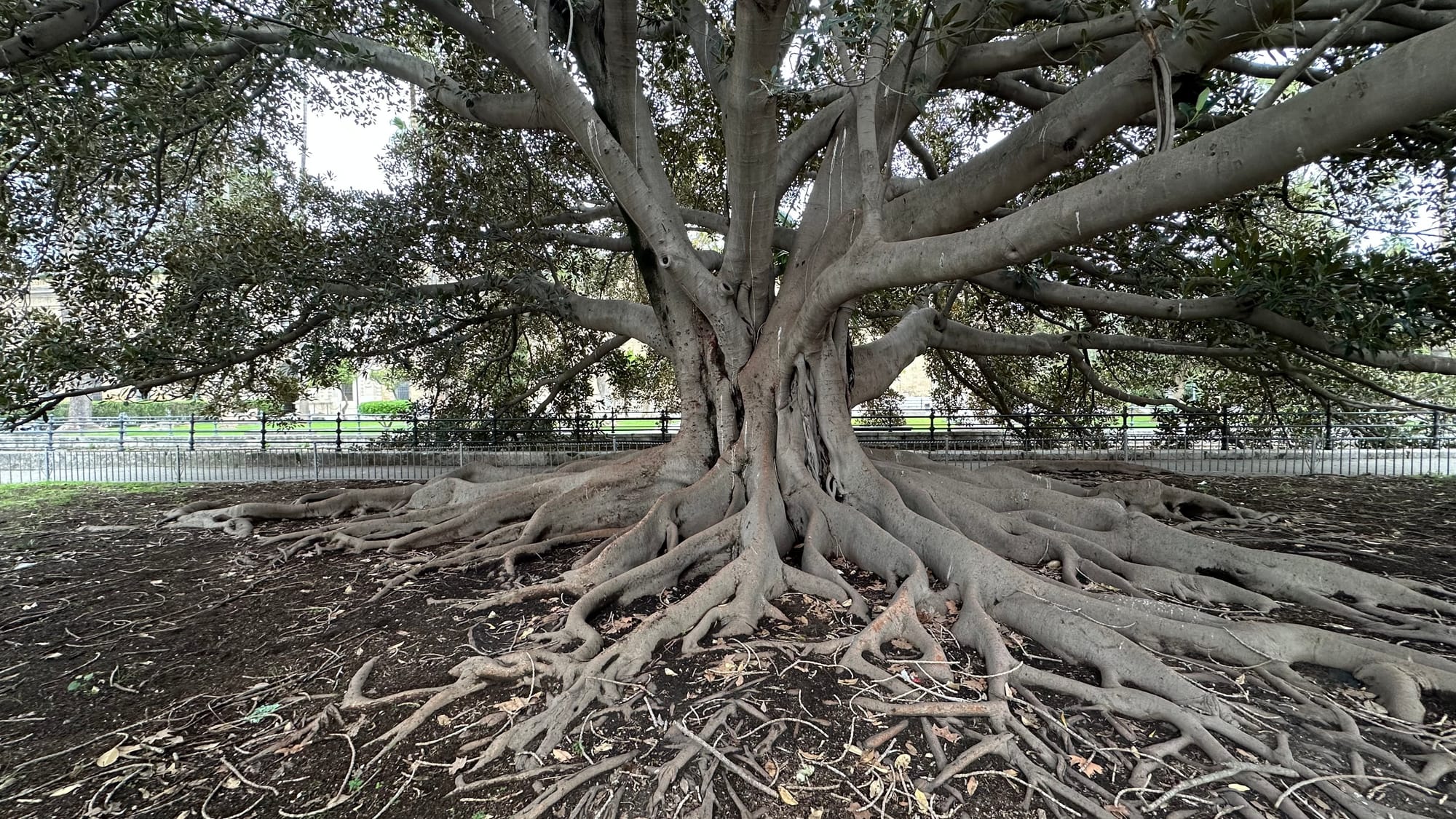
Lachlan, our Australian guide on the Friday evening tapas tour, introduced us to the north side of the city in a way we wouldn't have found on our own. Sometimes necessity makes the choice for you, and it makes the right choice.
We saw the Alameda de Hércules at night — the long tree-lined promenade in the north of the city, anchored at one end by its Roman columns, featuring Hercules and the emperor Caesar. Worth seeing in daylight too; we didn't quite manage it.
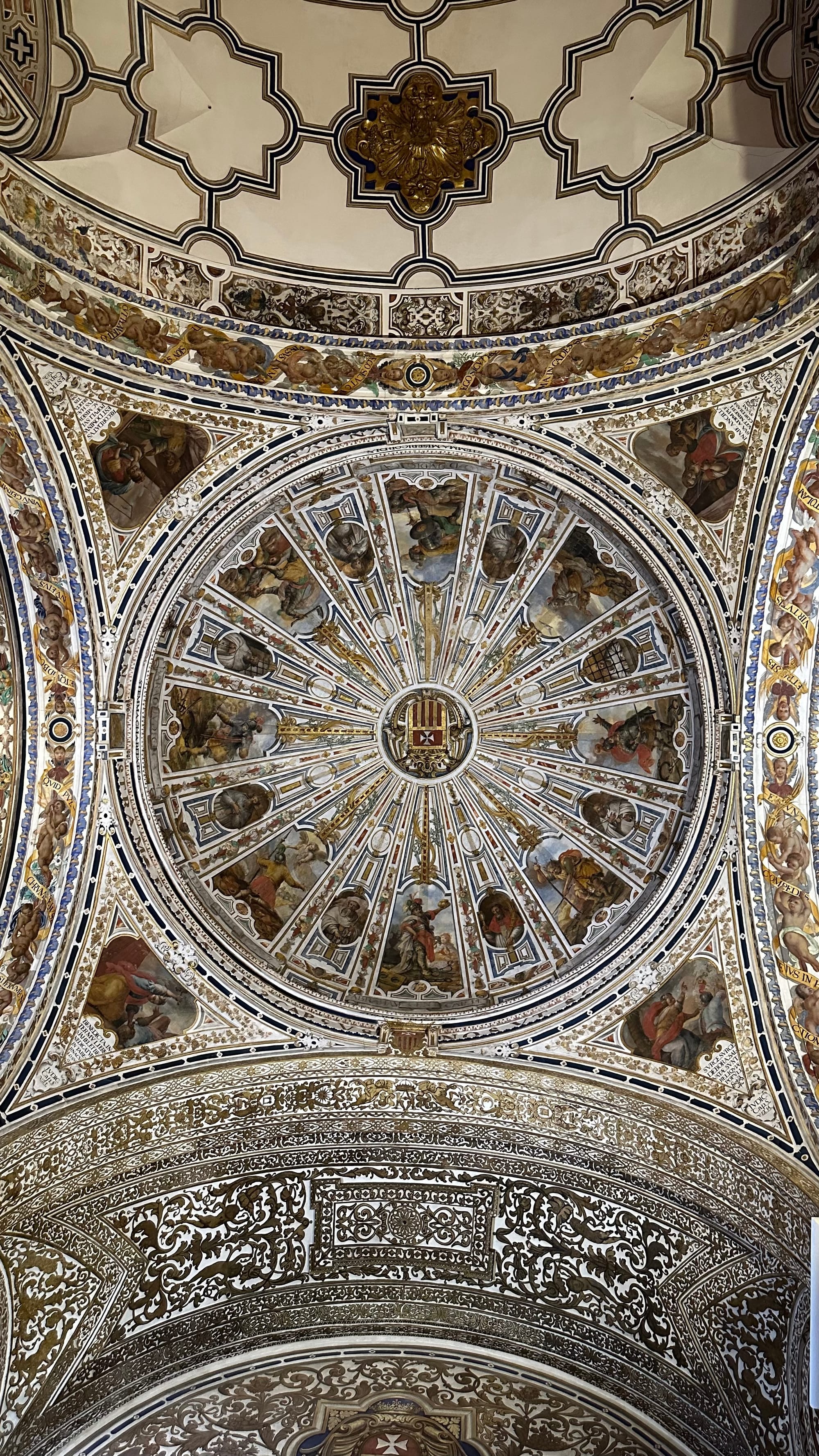
Saturday took in the Museo de Bellas Artes — one of Spain's finest art museums, in a gorgeous former convent. Grand, full of fine religious art, including some epics by Murillo, and some epic Zurbarán, and with a roof in one of the buildings that stops you in your tracks. On the way back to the city centre we visited the Antiquaries — Roman ruins and mosaics discovered beneath the city, sitting pretty much in the basement of the Setas.
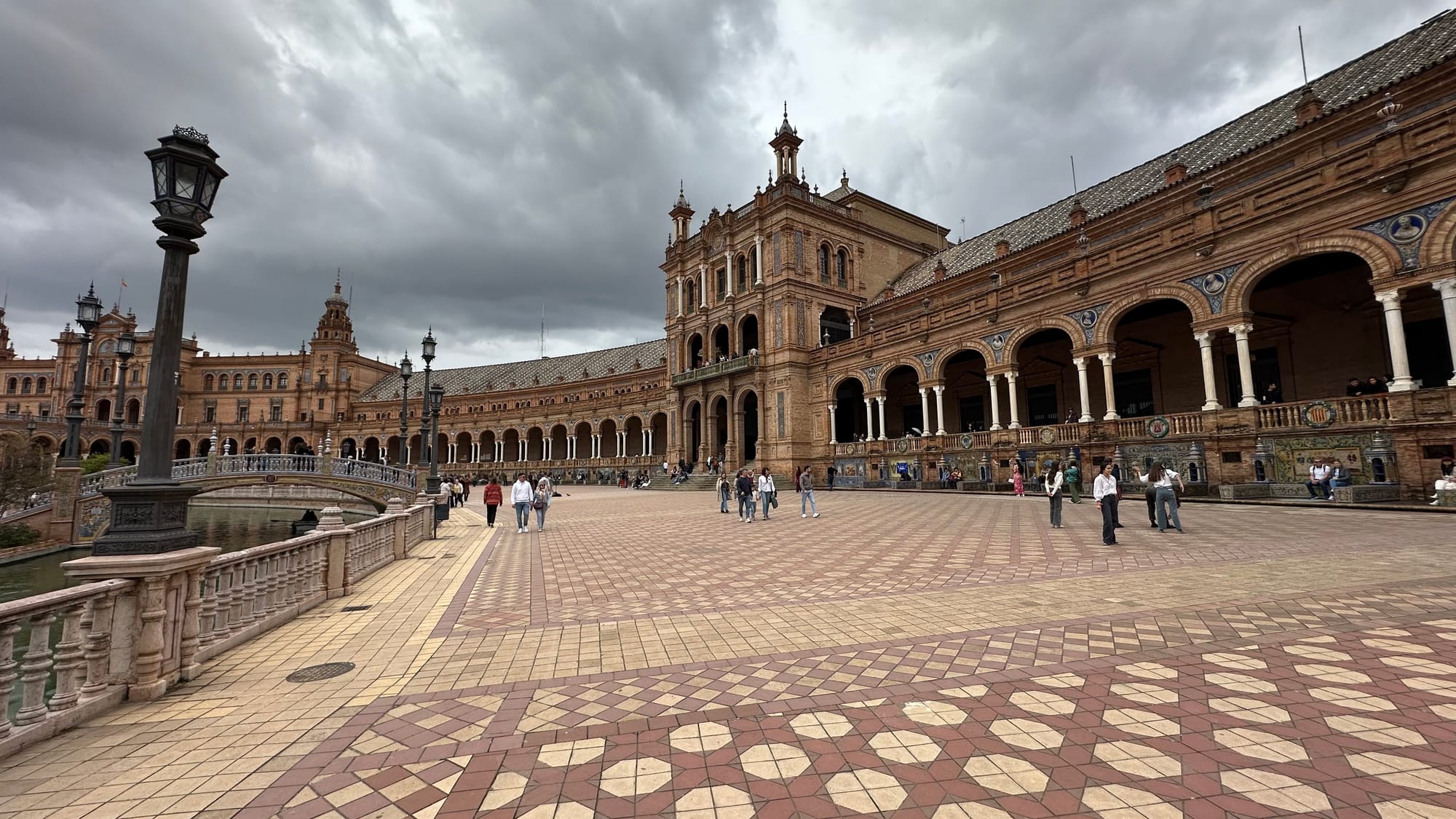
A stroll across the city to the Plaza de España, which is simply astounding. It's a vast open space — hard to convey the scale until you're standing in it — built around a sweeping semicircle of palace buildings, with a tiled alcove bench for each province of Spain running the entire length. Every alcove has its own painted ceramic map and scenes from the province's history. I found my beloved Bilbao — marked as Vizcaya, its province. One of those places that stops you in your tracks.
Late Saturday afternoon was a trip to the flamenco at La Casa del Flamenco. I've been once before, in Madrid, but this was a level above. There's something about flamenco — the intensity, the physicality, the raw emotion of it — that is just so, so horny. Like opera did ballet. Wonderful stuff.
I've always been fascinated by Catholicism — the ritual, the fervour, the sheer commitment of it. Being in Seville the week before Holy Week felt like arriving just as the city was winding itself up. You could feel it at the football — the noise, the passion — and in the streets in the days that followed. When we came out of the flamenco on Saturday evening and walked straight into a procession, it felt like a gift. Brief, unexpected, right outside the door. Seville is a city that doesn't need much prompting to remind you it's alive. I thoroughly enjoyed every second of it.
The football
Betis's usual home — the Estadio Benito Villamarín — is currently being redeveloped, so they've moved to La Cartuja for the 2025/26 season, which is how we ended up there for the Europa League. La Cartuja sits on the Isla de La Cartuja, a large island between the Guadalquivir and the Canal de Alfonso XIII, and it was the site of Expo '92 — the Universal Exhibition held in 1992 marking 500 years since Columbus reaching the Americas. I hadn't really clocked this before the trip.
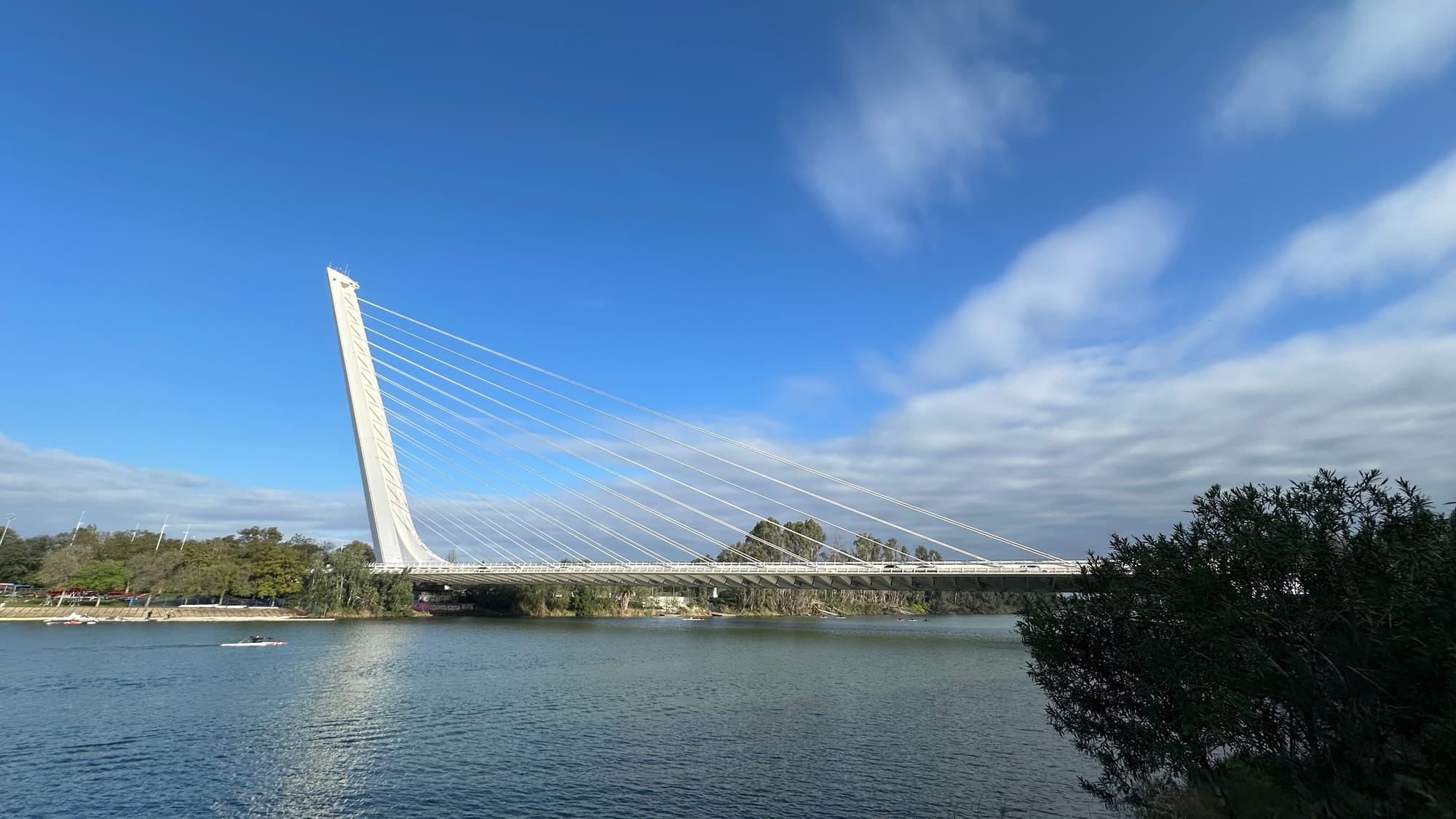
Five new bridges were built over the Guadalquivir to serve the Expo: the Alamillo, Barqueta, Cartuja, Cristo de la Expiración, and Delicias. We got to see some of the remaining pavilions and structures on the long walk back to the hotel after the game — an hour on foot, which generated fewer steps than you'd hope but was worth it. The most striking of the bridges is the Alamillo, designed by Santiago Calatrava — the architect behind the City of Arts and Sciences in Valencia and the Oculus in New York — its single inclined steel tower counterbalancing a 200-metre span with thirteen pairs of cables. There's a lot more on the Wikipedia page for Expo '92.
The match itself — Betis v Panathinaikos, Europa League last 16 second leg — was a proper adventure. The atmosphere was extraordinary, the noise immense. Betis were fantastic to watch. An hour's walk back through the island in the dark, past Expo pavilions and bridges, capped it off perfectly.
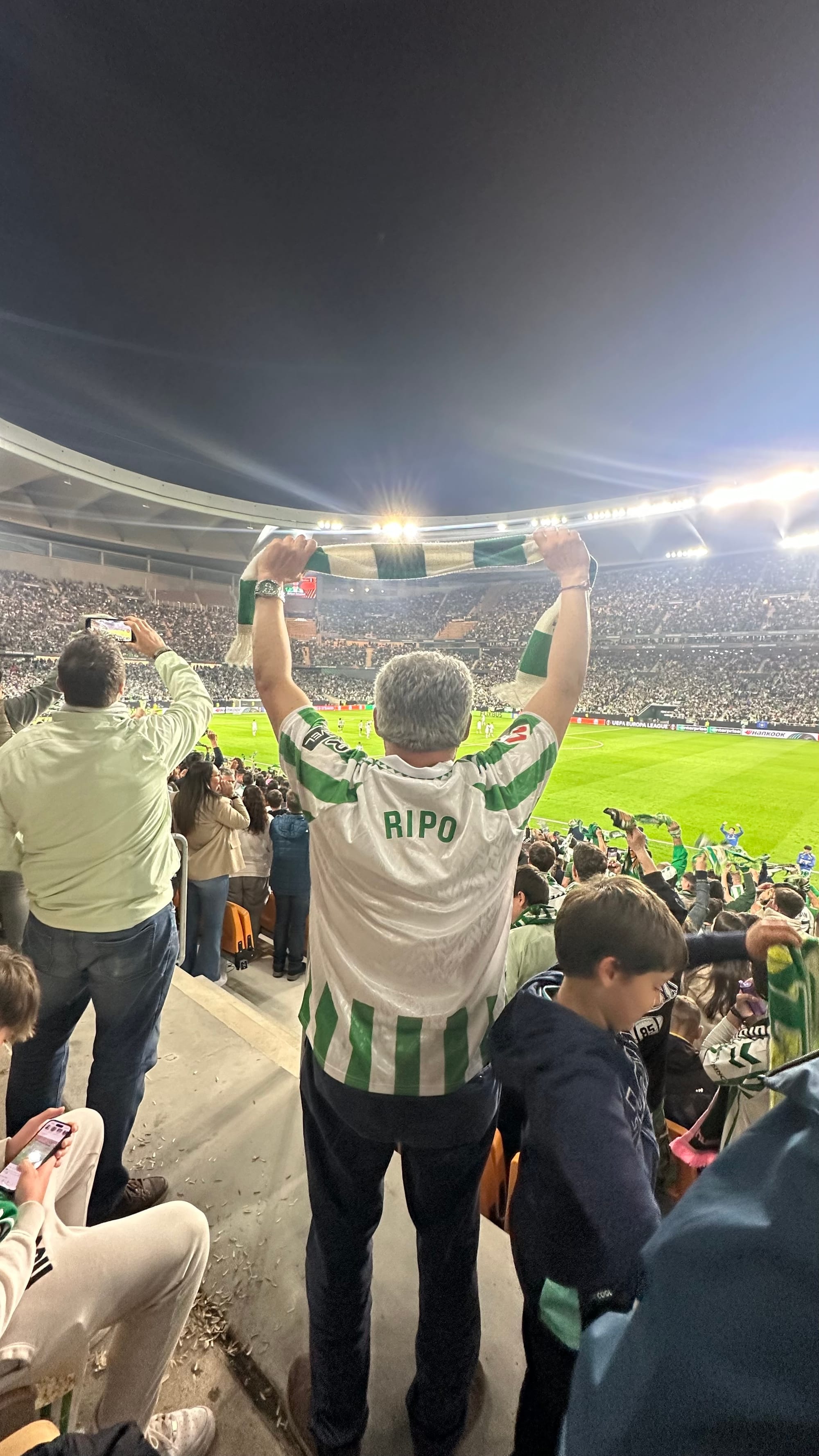
A postscript: on Sunday evening, safely home, I watched my beloved Athletic Club beat Betis 2-1. A little strange after cheering Betis on Thursday night in their European adventure. But Bilbao for lyf, innit.
Running
Two of my four runs for the week were in Seville, both along the Guadalquivir — wide paths, graffiti, fishermen, people in various forms of canoe. There are few better ways to get to know a city than running along its river.
Friday's was 5km, heading south along the river before turning inland into the city itself.
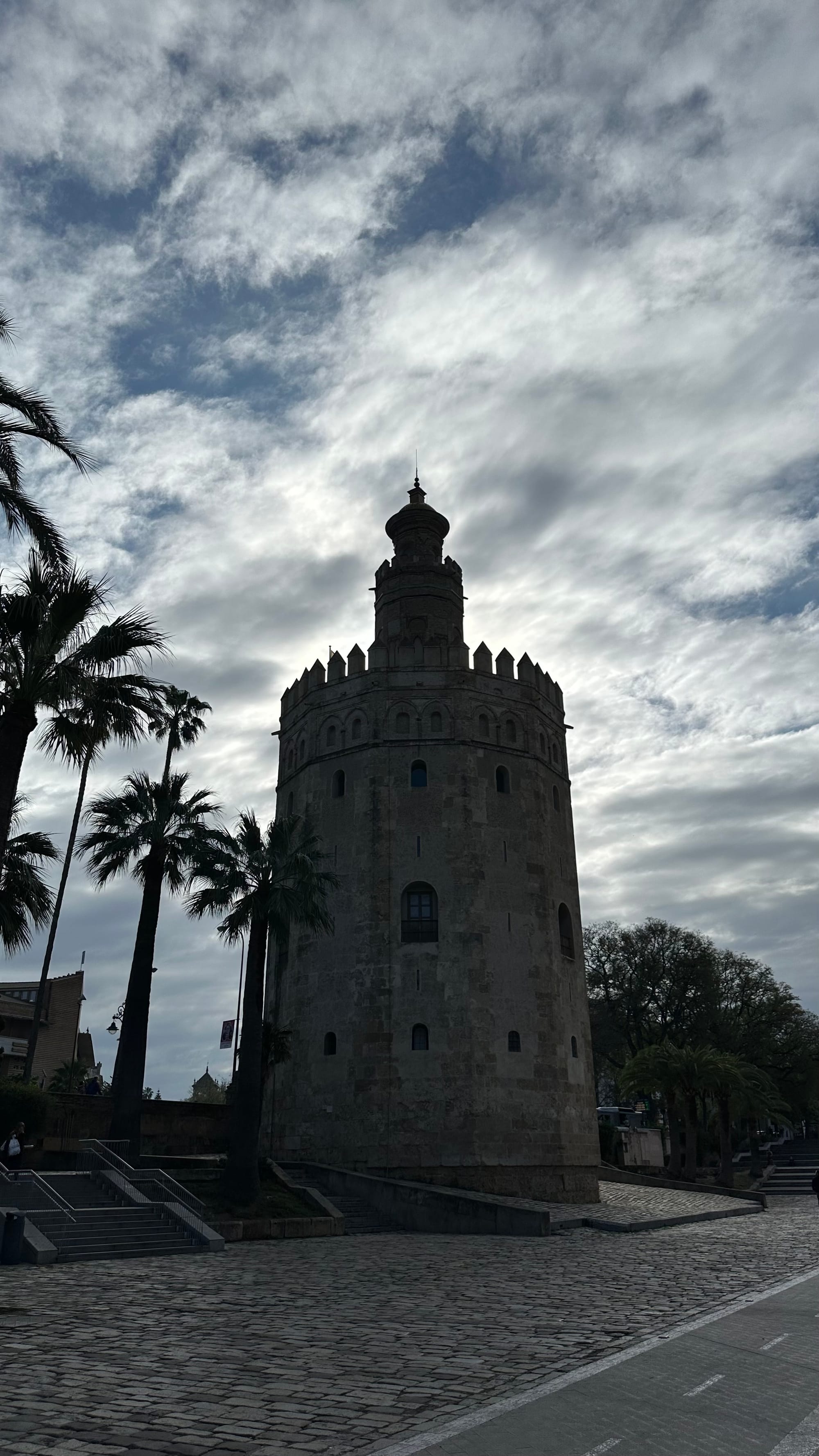
Saturday's 8km took in more of the riverfront: the Torre del Oro, the Torre Sevilla just over the water, the Alamillo bridge, a glimpse of the monastery across the river, and the graffiti that lines the whole stretch. The climate at this time of year is perfect — warm, dry, the orange blossom everywhere.
Eating and drinking
Friday lunch at Casa Morales: espinacas con garbanzos, pig knuckle, vermut, and the usual small pour of beer. Perfecto.
Friday evening: the tapas tour, north side of the city, led by Lachlan. Several stops, several cañas, several things eaten that we'd have walked past on our own.
Saturday breakfast at La Canasta, near the cathedral: cured ham on bread, a cortado, and a smoothie. Simple and exactly right.
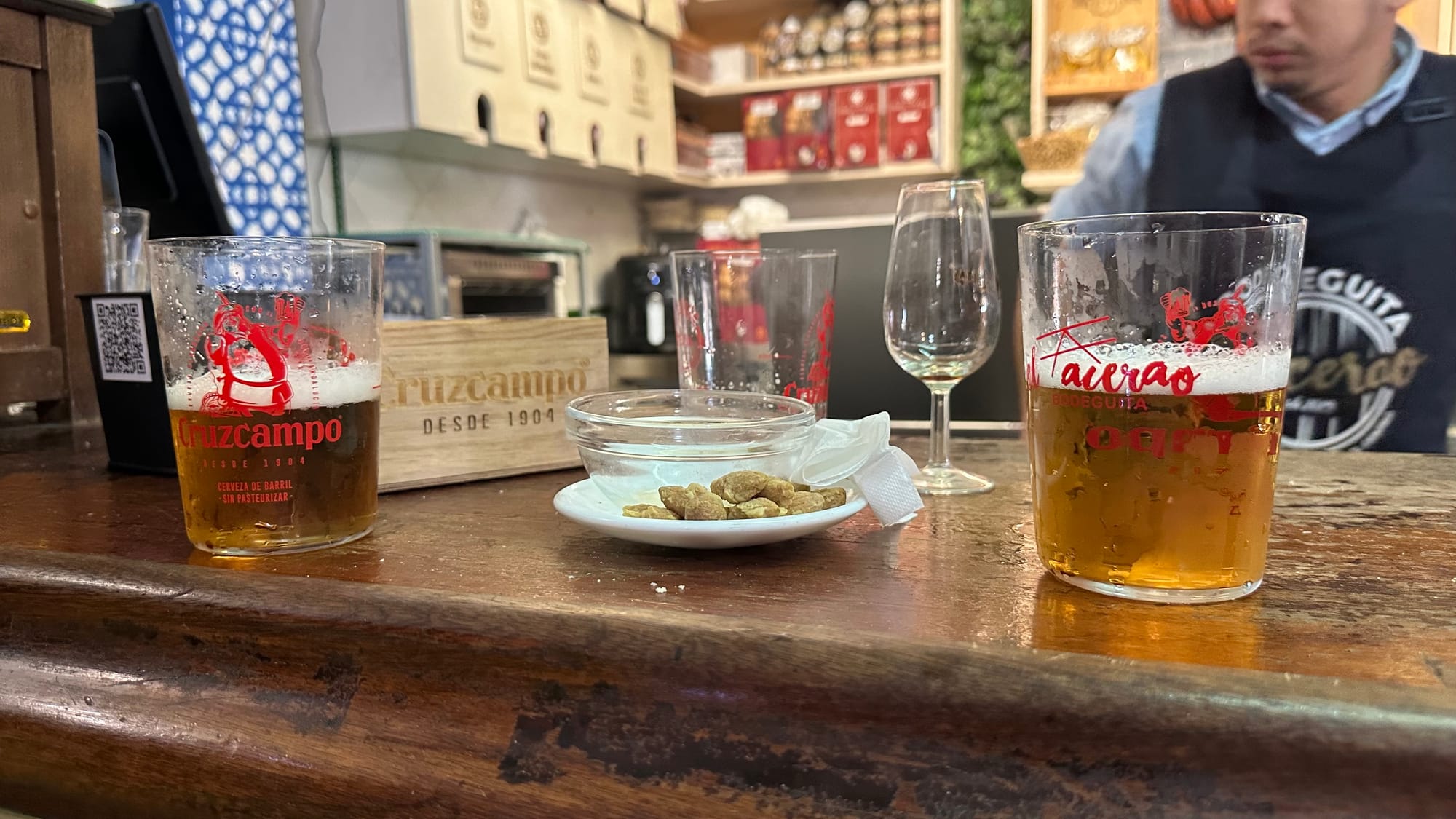
Saturday afternoon back at Bodeguita El Acerao — one of the tapas tour stops worth a return. Cruzcampo, a caña each: poured for about three seconds, swilled for two, then slapped down on the corner with its frothy head. Wonderful.
Saturday evening: tasting menu with paired wines at Azahar. The perfect way to sample a few tastes at the end of the trip. We walked through yet another parade to get there. All those processions. Enough to sway one back to the ways of Catholicism.
To do next time
- Visit the Alcázar — book at least two weeks in advance
- Up La Giralda tower at the cathedral — and up the Torre del Oro
- Explore the Expo '92 island properly in daylight — the pavilions and bridges deserve more than a night-time walk after a football match
- See Betis at the Estadio Benito Villamarín when the redevelopment is done
- Go back for Holy Week itself
- The Alameda de Hércules in daylight
- Walking along the top of the Setas.
- More of the north side of the city
- The Macarena church, Santa Maria Magdalena, and the Convento de Santa Inés (for the pastries)
- El Rinconcillo for food
- Museo del Baile Flamenco and the Museum of Folk Art and Costume
- Plaza de la Maestranza — and the Museo Taurino inside it
- More of Triana
- Return to Bodeguita El Acerao — obviously
- And honestly, just the vibes. I loved it there.